
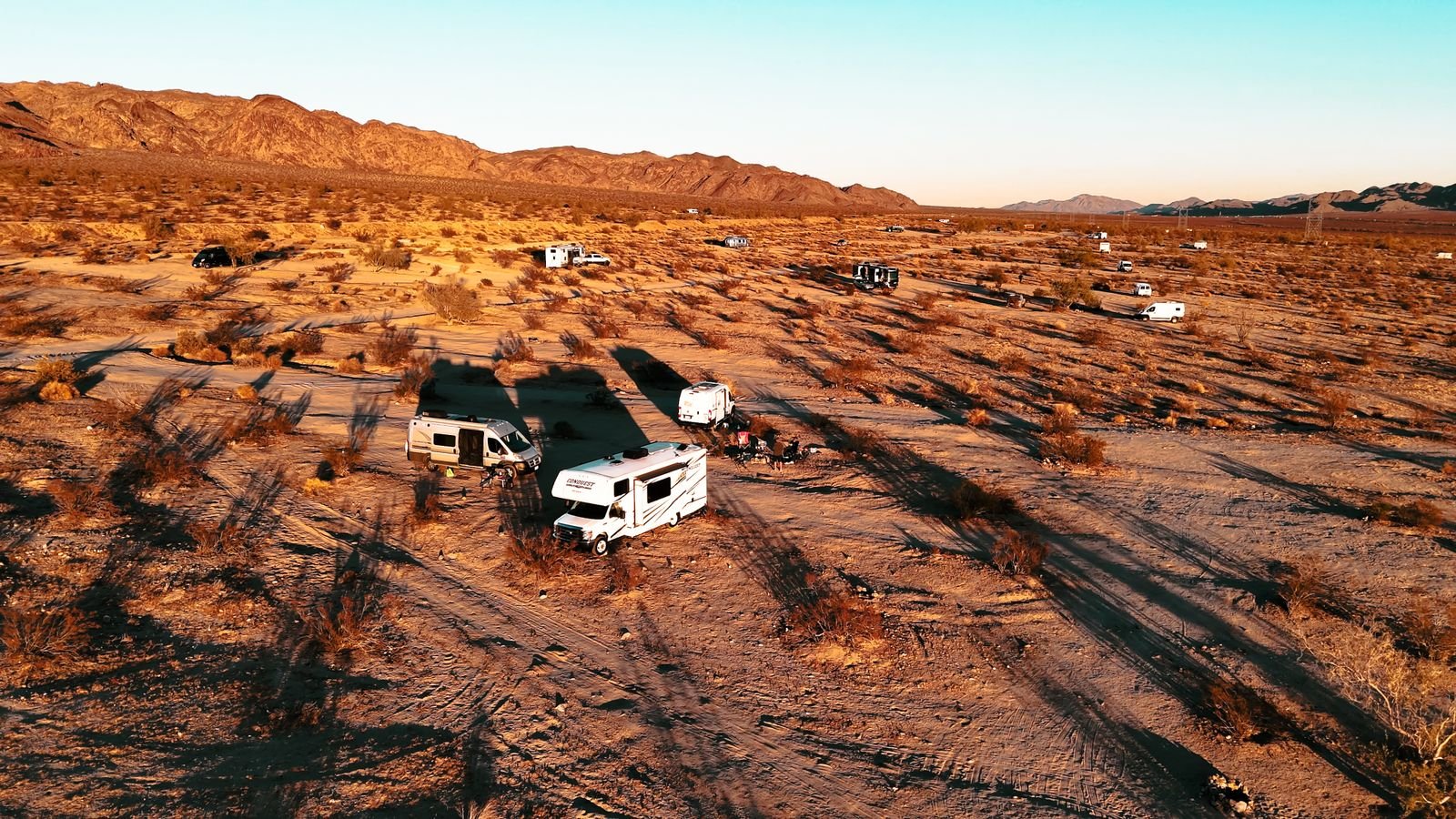
When it’s snowing back home, the low deserts of Arizona are sunny and mild. That’s why so many RVers head here every winter. People call them snowbirds, and some stay for months.
But not every part of the state is warm. Flagstaff, the White Mountains, and the Grand Canyon get real snow and hard freezes. For winter, you want the low desert in the south and west parts of the state.
These are the main areas RVers head to, with a few notes on each one.
Quartzsite
Quartzsite is a small town near the California line that fills up with RVs every winter. Lots of people camp out in the open desert around town.
The big draw is the La Posa Long Term Visitor Area, run by the Bureau of Land Management (BLM). It’s open desert camping with very few services. You bring your own water and power, and you have to be ready to dry camp.
A few things to know about the Long Term Visitor Areas:
- You need a permit to stay from September 15 to April 15.
- You can buy a permit for the whole season or for a short visit.
- You can get one at the host station at the entrance or at a BLM office.
- Fees change, so check the BLM Yuma Field Office website for current prices before you go.
If you’ve never dry camped before, read our post on free RV camping first.
Yuma
Yuma sits in the far southwest corner of the state, along the Colorado River. It’s one of the warmest places in the country in winter, and it has a lot of RV parks and resorts.
There’s also a BLM Long Term Visitor Area near Imperial Dam, north of town. It works the same way as the one at Quartzsite, with the same permit rules.
Lake Havasu City
Lake Havasu City is on the Colorado River, on the west side of the state. It’s the town with the London Bridge. Winter days are usually mild, and there are RV parks in and around town, plus state park camping near the lake.
The Phoenix area: Mesa and Apache Junction
The east side of the Phoenix area has a lot of RV resorts. Many are for people 55 and older, and many offer monthly or full-season stays. They often have pools, clubs, and planned activities.
If you’d rather be out in nature, Lost Dutchman State Park near Apache Junction sits right at the foot of the Superstition Mountains. It has RV sites with hookups. It’s very popular in winter, so book early.
Tucson
Tucson is a little cooler than Phoenix in winter, and still mild most days. Catalina State Park, just north of the city, has RV sites with mountain views and hiking trails. Like Lost Dutchman, it fills up fast in the busy months.
A few more to look at
- Kartchner Caverns State Park near Benson. You can camp and take a cave tour.
- Organ Pipe Cactus National Monument near Ajo. It has a campground in quiet Sonoran Desert, with lots of cactus.
Check each park’s website for site length limits. Some older campgrounds can’t fit big rigs.
How to get a good site
Winter is the busy season in Arizona. The best spots go fast.
- Book state parks early. Arizona State Parks takes reservations online at azstateparks.com. Popular parks can fill up months ahead.
- Call RV parks for monthly rates. Many parks charge less per night if you stay a month or the whole season. Ask what’s included, like electric.
- Have a backup plan. If your first pick is full, know a second place nearby.
- Ask about rules. Some resorts have age limits, rig age rules, or pet rules. Ask before you book.
What to pack for an Arizona winter
Days are warm, but desert nights can get cold. Some nights drop near freezing, even in the low desert.
- Warm bedding and a jacket for nights
- A way to heat your RV, and plenty of propane
- Sunscreen and a hat, even in January
- Extra water if you’re dry camping
- A heated water hose if you’ll be on a hookup and you’re worried about a cold snap
When to go
Most snowbirds show up in the fall and leave in the spring, before the desert heat comes back. By May, the low desert gets very hot. That’s when many RVers head north to the cooler high country.
Next step: Find more good spots in our Places to Camp section.