
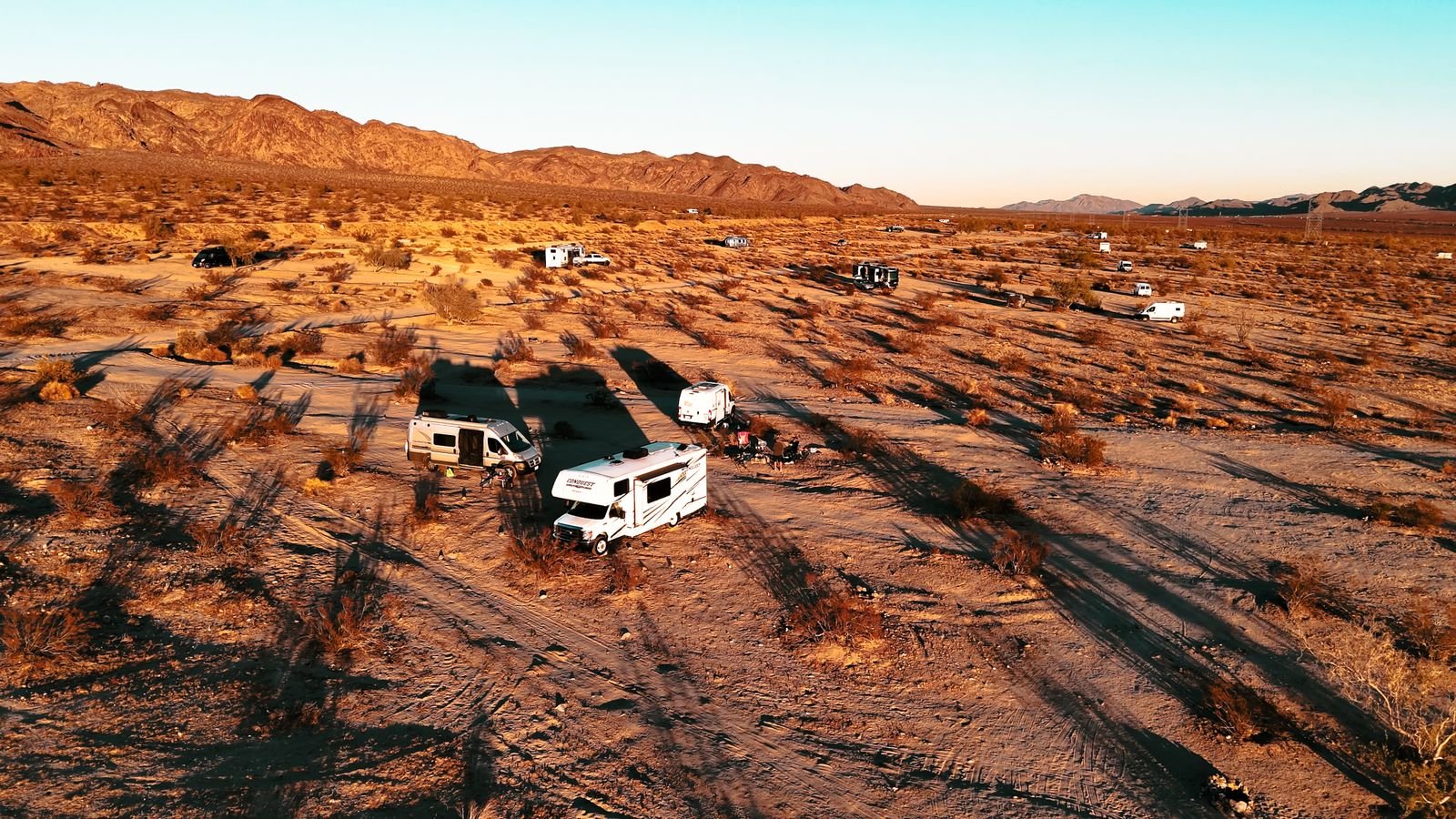
Campground fees add up fast. A few nights here, a week there, and suddenly the camping costs more than the gas.
Here’s the good news. There are lots of places in the U.S. where you can park your RV and camp for free. RVers call it boondocking or dry camping. It means camping without hookups. No power cord, no water hose, no sewer.
It takes a little planning. But for a lot of people, it’s the best part of RVing. Quiet, open space, and stars you can’t see in town.
Public land
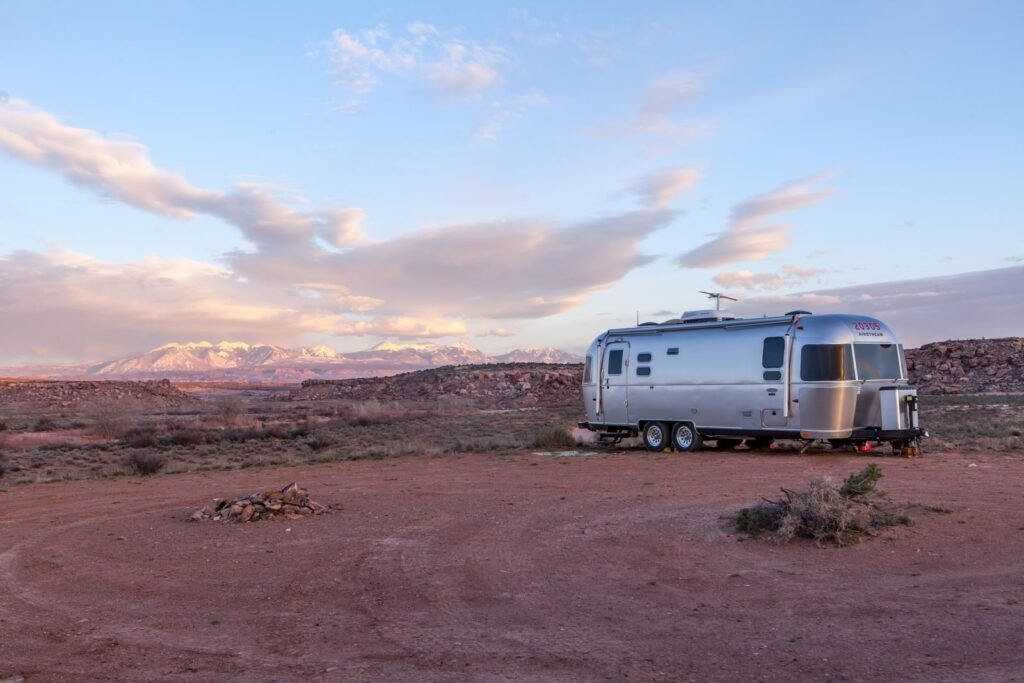
This is where most free camping happens. A lot of land in the West belongs to the public, and much of it is open to camping. Arizona has plenty of it.
BLM land. The Bureau of Land Management looks after huge areas of open land. Many of them allow free “dispersed camping,” which means you can camp outside of a set campground.
National forests. Many national forests allow dispersed camping too, often along forest roads.
A few rules you’ll see a lot:
- Stay limits. Many areas let you stay about two weeks in one spot, then you have to move a good distance away. The exact rules change by area.
- Use spots that are already used. Park where others have camped before. Don’t drive over plants or make new roads.
- Fire rules. Fire bans are common, especially in dry seasons. Check before you light anything.
Always check the rules with the local BLM or forest office before you go. They post them online, and they change.
Store and business parking lots
Some businesses let RVers park overnight. This isn’t camping. It’s a place to sleep on a long drive.
You’ll hear about Walmart, Cracker Barrel, Cabela’s, Bass Pro, and some truck stops. But it depends on the store and the city. Some towns don’t allow it at all.
If you try it:
- Call or ask a manager first. Every time.
- Park out of the way, away from the doors.
- Don’t put out slides, chairs, or the awning.
- Stay one night, buy something, and leave early.
Being polite keeps these spots open for everyone.
Other free or almost-free spots
- Rest areas. Some states let you rest for a few hours. Others don’t allow overnight stays. Watch for the signs.
- Casinos. Some allow RV parking. Call ahead and ask security.
- Friends and family. Their driveway counts. Just ask first, and check their city and HOA rules.
How to find spots
You don’t have to guess. RVers share free spots online, with reviews, photos, and notes about the road in. Popular apps and sites include Campendium, iOverlander, and FreeRoam. Read the latest reviews. Road conditions and rules can change.
Look at the road before you drive in. Some dirt roads are fine for a truck and a nightmare for a big trailer. If you’re not sure, park somewhere safe and walk or drive in with your tow vehicle first.
Get your RV ready for no hookups
Free camping means you bring everything with you. Here’s what to think about:
Water. Fill your fresh water tank before you go. Learn to use less of it: short showers, and a water bottle at the sink.
Power. Your RV batteries run the lights, water pump, and furnace fan. They won’t last forever. Many boondockers use a generator, solar panels, or both. Know your generator hours, since some areas have quiet hours.
Tanks. Your gray and black tanks will fill up. Know how many days you can last, and where the closest dump station is.
Trash. Pack out everything you bring in. Leave the spot cleaner than you found it.
Cell signal. It can be weak or gone out on public land. Tell someone where you’ll be, and download maps before you lose service.
Try it close to home first
Your first night of boondocking doesn’t have to be far away. Pick a spot an hour or two from home, for one or two nights. You’ll learn how long your water and power last, and you can always drive home if something goes wrong.
Next step: Look through our Places to Camp section for more ideas.