
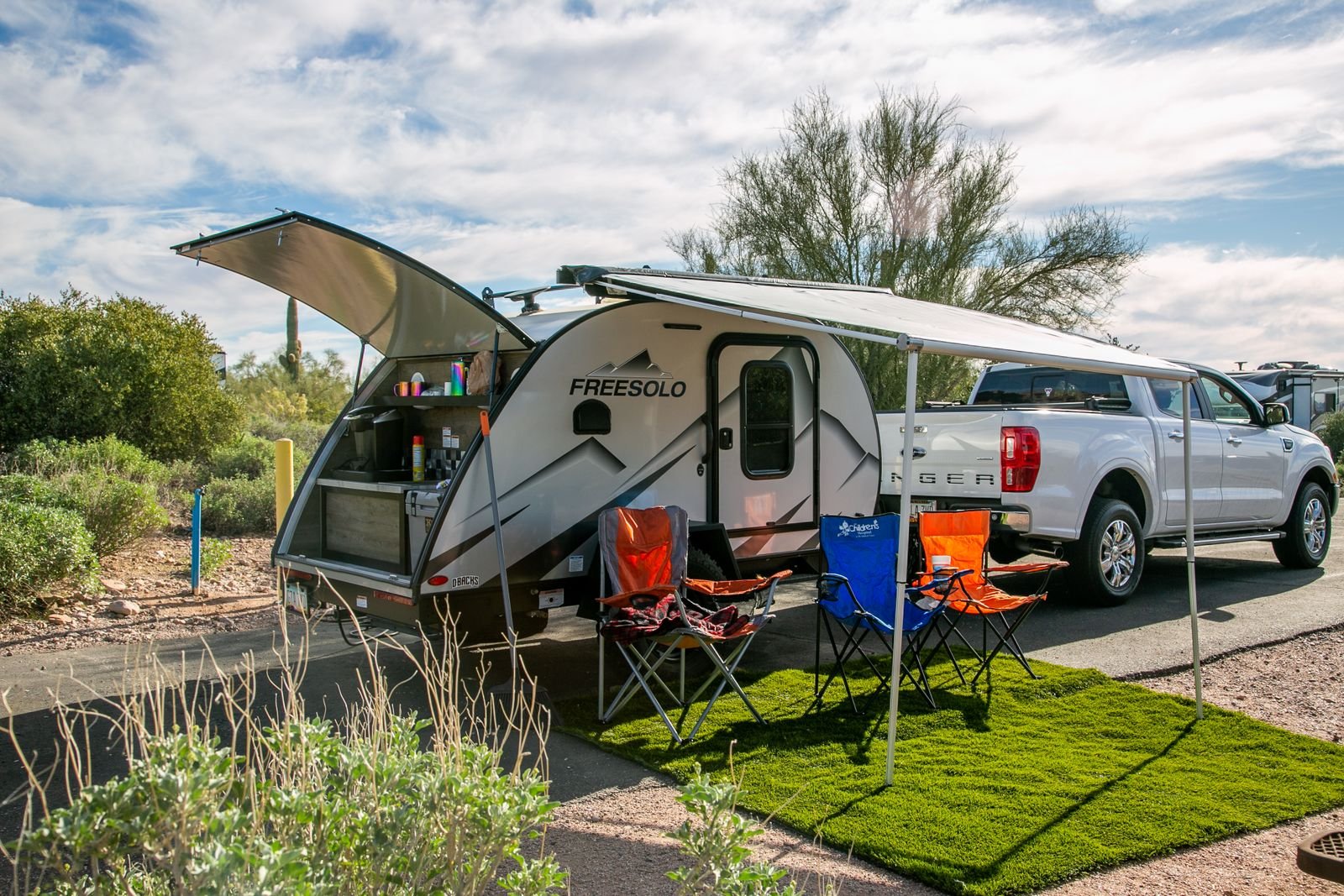
You’ve seen the pictures. Coffee outside the camper door. A lake out the window. No hotel check-in.
Then you walk onto an RV lot and it gets confusing fast. Hundreds of floor plans. Words you’ve never heard. A salesperson who wants an answer today.
Slow down. An RV is one of the biggest things most people ever buy, after a house and maybe a truck. A little homework now saves you a lot of money and headaches later.
Start with how you’ll use it
Picture your trips before you picture the RV.
- Will you go out a few weekends a year, or for weeks at a time?
- Who’s coming? Just the two of you, or kids, grandkids, and the dog?
- Do you want campgrounds with power and water, or quiet spots out in the desert with no hookups?
- How far will you drive in a day?
Be honest here. A lot of folks buy for the dream trip they’ll take once, and then haul too much RV around on every short weekend.
Know the main types
Motorhomes have the engine built in. You drive them like a big vehicle.
- Class A is the bus-style one. Lots of room, but big to drive and park.
- Class C has the bed over the cab. A good middle size.
- Class B is a camper van. Easy to drive, but tight inside.
Towables hook to your truck or SUV.
- Travel trailers pull with a regular bumper hitch.
- Fifth wheels hook into the bed of a pickup. They tow steady, but you need the right truck.
- Pop-ups and small trailers are light and cheaper, with fewer comforts.
With a towable, you can unhook and drive your truck around town. With a motorhome, you’ll want a small car behind it, or you’ll be driving the whole rig to the grocery store.
Check what your truck can safely pull
If you want a trailer, this is the big one. Every truck has a towing limit. You’ll find it in the owner’s manual or on the sticker inside the driver’s door.
Don’t go by what the salesperson says your truck can tow. Look at the real weight of the trailer when it’s loaded with water, food, gear, and people. A trailer that’s right at your truck’s limit is hard on the truck and scary on the highway. Leave yourself some room.
Add up the real cost
The sticker price is just the start. Plan for these too:
- Insurance
- Storage, if you can’t park it at home (check your HOA rules first)
- Fuel, and RVs use a lot of it
- Campground fees
- Tires, batteries, and regular upkeep
- Repairs, because something always needs fixing
- Gear: hoses, levelers, a surge protector, kitchen stuff
Also know that RVs lose value fast, mostly in the first few years. Loans can stretch out for many years, so it’s easy to owe more than the RV is worth. Put down what you can, and don’t stretch the budget for a bigger model.
Live in the floor plan for a minute
At the dealer or an RV show, don’t just walk through. Sit down. Lie on the bed. Stand in the shower. Pretend to cook dinner.
Ask yourself:
- Can you reach the bathroom with the slides pulled in? You’ll need it at rest stops.
- Is there a place to sit and eat that doesn’t turn into a bed every night?
- Where will your stuff go?
- Can two people pass each other in the hallway?
Slide-outs give you more room. They’re also one more thing that can break. Fewer slides can mean fewer problems.
Rent before you buy
This is the best advice we can give. Rent an RV like the one you want for a weekend or a week. You’ll learn more in three days than in three months of looking online.
You’ll find out if you like the size, if you hate backing up, and if the bed is big enough. It costs a little now and can save you from a very expensive mistake.
Get it inspected
New or used, have it checked before you sign. On a new RV, do a slow walk-through with the dealer and test everything: lights, water, fridge, AC, furnace, slides, and awning. Write down anything that’s wrong and get it fixed before you drive off.
On a used one, pay an independent RV inspector. It’s money well spent. (We cover this more in our post on buying new vs. used.)
Don’t let anyone rush you
There will always be another RV, another sale, another “today only” price. The right RV is the one that fits how you camp and what you can afford. Take your time, and you’ll enjoy it a lot more.
Next step: Read our post on buying a new or used RV before you start shopping.