
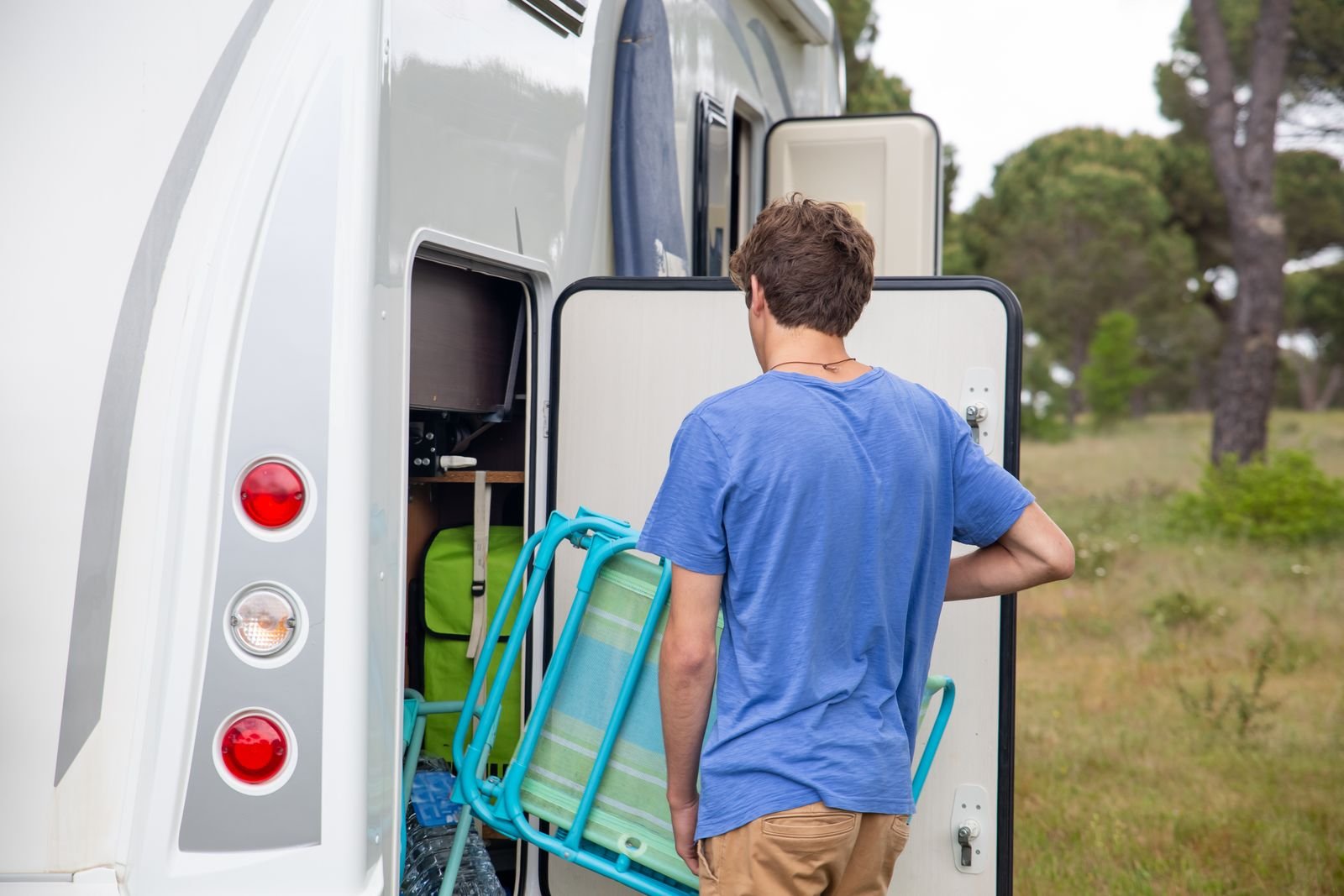
You picked up your RV, drove it home, and parked it in the driveway. Now you’re standing there wondering what else you need.
A lot of new owners find this out the hard way. Most RVs don’t come ready to camp. The dealer may toss in a starter kit, but it’s usually the cheap stuff. Some of the most important gear you have to buy yourself.
This list covers what you need for a first trip. You don’t need everything in the store. Start with these, then add more as you learn how you like to camp.
Water gear
A drinking water hose. Get one made for drinking water. They’re usually white or blue and say “drinking water safe.” Don’t use a regular garden hose. Keep this hose only for fresh water.
A water pressure regulator. It screws on where the hose meets the campground faucet. Some campgrounds have strong water pressure that can damage your RV’s pipes. This little part protects them.
A water filter. It helps with bad taste, smell, and sediment. Campground water can vary a lot from place to place.
Sewer gear
A sewer hose kit. This is how your tanks drain into the campground’s dump. Get a good, thick one with the fittings included. Cheap thin hoses tear, and you do not want that to happen.
Disposable gloves. Keep a box near your sewer gear. Use them every time.
RV toilet paper and tank treatment. RV toilet paper breaks down quickly so it doesn’t clog your tank. Tank treatment helps with smell.
A separate hose for rinsing. Use a different colored hose for rinsing out sewer stuff. Never use your drinking water hose for this.
Power gear
A surge protector. This one matters. Campground power can spike or drop, and that can fry the electronics in your RV. A surge protector plugs in between the campground pedestal and your power cord. Some models, often called an EMS, also cut the power if the voltage gets too high or too low.
Power adapters. Campgrounds have 30 amp and 50 amp hookups, and sometimes regular household plugs. An adapter lets you plug in no matter which one your site has. Know which kind your RV uses.
Leveling and parking gear
Leveling blocks. Most campsites aren’t flat. Blocks go under your tires to level the RV. A level RV sleeps better, and your fridge works better too.
Wheel chocks. They keep your trailer from rolling, mostly when you unhook it from the truck.
A small level. Some people stick a bubble level on the front and side of the RV so they can see it while parking.
Safety gear
- A fire extinguisher. Most RVs come with one. Check that yours is there and charged.
- A first aid kit.
- A tire pressure gauge. Check your tires before every trip. Low tire pressure is a common cause of blowouts.
- A flashlight or headlamp. You’ll use it more than you think, especially hooking up after dark.
- Smoke, carbon monoxide, and propane detectors. Your RV should have them. Test them before you go.
A basic tool bag
You don’t need a full shop. A small bag with these handles most little problems:
- Screwdrivers, including a square-bit one (lots of RV screws use them)
- Pliers and a small adjustable wrench
- Duct tape and zip ties
- A tape measure
- Work gloves
Kitchen and camp stuff
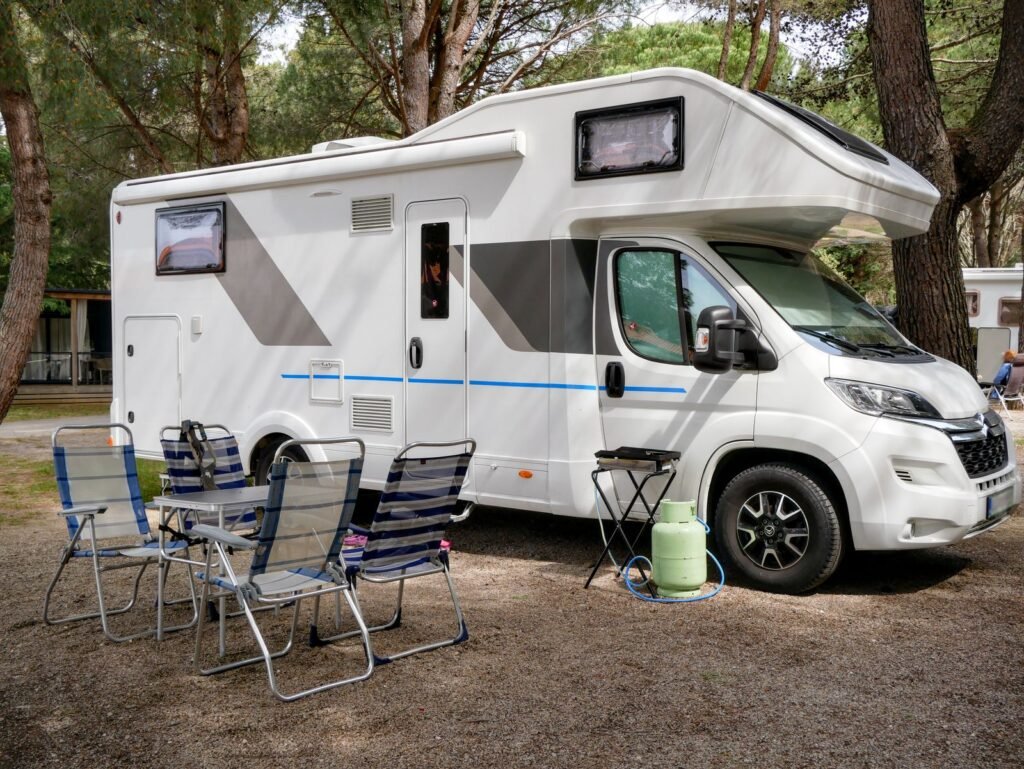
Keep it simple your first time. Bring what you’d use at home, but less of it.
- A couple of pots and a pan
- Plates, cups, and utensils
- Paper towels and trash bags
- Dish soap and a sponge
- Camp chairs
- A simple outdoor mat for outside your door
A good tip is to buy separate kitchen stuff just for the RV. That way it stays packed, and you don’t forget anything.
What you can wait on
Lots of gear is nice but not needed on day one: outdoor kitchens, fancy grills, satellite dishes, and big gadgets. Take a few trips first. You’ll quickly learn what you wish you had, and you won’t waste money on stuff you never use.
One more tip
Make a checklist and keep it in the RV. Before every trip, go down the list. After a few trips, you’ll add your own items to it. It saves a lot of “Oh no, we forgot the…” moments.
Next step: Before your first trip, read how to dump your RV tanks. You’ll need it.